


I keep a slim stack of cards in my front pocket every day. Whoa, seriously now. I’ve been thinking about how we carry value and how those cards could be smarter. My instinct said the future would be thin and contactless. Initially I thought smart cards would feel gimmicky, but after a few experiments I changed my mind; they can be elegant and robust if designed right.
Contactless payments changed retail, and NFC is quietly enabling personal custody. Hmm… this feels different. Smart card wallets pair NFC hardware with tamper-resistant secure elements, and they can store private keys offline while letting you tap to pay or sign transactions. Their UX is simple and fast. Here’s the thing: security often competes with convenience, though actually with the right architecture you can get both.
I tried a few in the wild. My first impression was lukewarm, but then something clicked. Something felt off about some designs—buttons buried under rubber, firmware updates that required clumsy desktop tools, keys exported in ways that made me uneasy. I’ll be honest, this part bugs me. On one hand, a contactless card that keeps your seed isolated is brilliant; on the other hand, if the card’s lifecycle management or update path is opaque, you’ve traded one risk for another.
Okay, so check this out—there are vendors solving those lifecycle problems with secure elements and remote attestation. Seriously, yes. Some manufacturers focus on single-chip secure elements and minimal user interfaces to reduce attack surface. If you like my bias, I’m partial to solutions that minimize attack surface. My instinct said minimal firmware and no unnecessary ports are safer—no USB, no exposed debug, just a tap.
You can carry one in your wallet. Wow! It behaves like a typical plastic credit card but with cryptographic identity, and that feels magical in 2025. There are trade-offs, though. For instance, if you lose the card, recovery depends on your backup strategy, which returns us to the classic seed or social recovery debate.
Here’s a practical scenario I keep imagining. My neighbor borrows a card for emergencies, taps it, and moves funds while I watch. Hmm… wait, not so fast. Initially I thought sharing hardware was dumb, but then realized that with policy-level controls you can limit actions and thresholds. Actually, wait—let me rephrase that: the device can enforce policies but the user experience around consent and identity still needs work.
If you’re designing one, think lifecycle. Firmware updates, tamper-evidence, revocation—these are the hard parts. On one hand the card should be disposable in a pinch; on the other hand you want long-term cryptographic durability and trusted firmware. My working solution is layered custody: a hot wallet for tiny spends and a smart card for larger, more important holdings. I’m not 100% sure it’s the final pattern, but it’s been practical for me.
Security audits really matter. Third-party reviews, reproducible builds, and public attestations make a difference. Check this out—if you want a consumer-ready, tap-to-pay experience that still uses hardware-backed keys, consider card-based solutions because they’ve built a lot of product polish into the form factor. I’m biased, but having used those cards I appreciate the frictionless UX. Still, ask hard questions: who can provision keys, who can revoke them, and what happens if the supply chain is compromised?
Practical picks and a quick recommendation
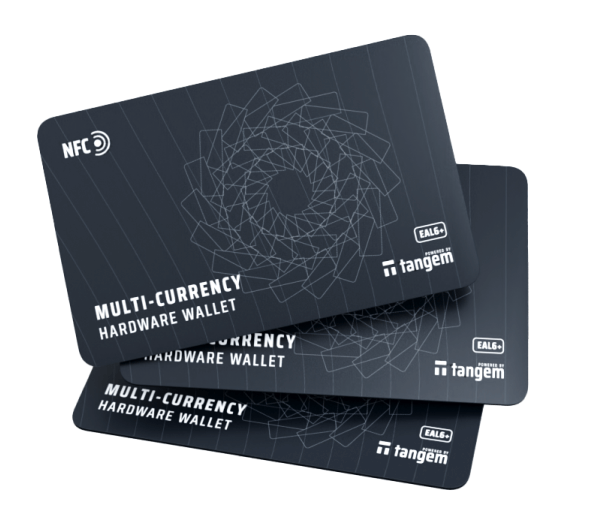
If you’re shopping, look at manufacturer transparency, attestation capabilities, and on-device policy controls; one device I’d point to for a consumer-friendly tap-to-pay approach is the tangem hardware wallet which ships as card-like hardware and emphasizes simplicity. I’m biased toward devices that keep the cryptographic secret on-chip and avoid unnecessary interfaces. Also, think about the backup: multisig, social recovery, and printed seeds have trade-offs—choose what matches your threat model. (oh, and by the way… test recovery before you trust it)
From a developer standpoint, NFC brings both constraints and advantages. You must optimize for short interactions, careful power budgets, and robust tap handling. From a user standpoint, it’s about trust and predictability—taps should be fast, errors should be rare, and firmware updates should be clear and verifiable. Somethin’ about a physical object in your hand changes behavior; people treat cards like money, not like ephemeral keys on a phone, and that matters psychologically.
FAQ
How secure is a smart card compared to a hardware USB wallet?
They can be very secure—single-chip secure elements are designed to resist physical and logical extraction—but the security story depends on implementation details like secure boot, attestations, and update mechanisms. On one hand a card removes the attack surface of USB ports; on the other hand it can introduce supply-chain risks if manufacturing controls are weak.
What happens if I lose the card?
Recovery depends on your backup approach: a mnemonic seed, a multisig scheme, or social recovery. Make sure your chosen device supports secure provisioning and clear recovery docs. I’m not 100% evangelical about one method; test your chosen flow and practise recovery in a non-critical setting.
Can I use a smart card for contactless payments at shops?
Yes—many cards are built with payment rails or wallet integrations that let you tap to pay. Expect regional variability in acceptance and some UX differences versus a bank card. Also, know that legal and regulatory frameworks around payments can affect how a crypto-backed payment is routed.